1. Science Department, Wiawso College of Education, Sefwi Wiawso, Ghana.
2. Education Department, Wiawso College of Education, Sefwi Wiawso, Ghana.
3. Wiawso College of Education, Sefwi Wiawso, Ghana.
*Corresponding Author:
Francis Arthur-Baidoo, Science Department, Wiawso College of Education, Sefwi Wiawso, Ghana.
Citation:
Francis Arthur-Baidoo, Ophelia Oduro, Miriam Dansowaa Acquah (2026), Interactive Multimedia Enhancing Pre-service Science Teachers’ Motivation and Engagement in Biology Instruction, J. Case Chronicles and Clinical Reports 3(4): DOI: 10.64585/3065-0690-3-4-17.
This study investigated effect of using interactive multimedia on pre-service science teachers’ motivation and engagement in teaching and learning some biology concepts in Wiawso College of Education in Ghana. Action research design was adopted for the study and sample size was an intact class consisted of 76 participants. The study used purposive sampling technique. The data collected by questionnaires were analysed by using Microsoft Excel to compute the frequency, mean and standard deviation of each item were determined and, Motivation, engagement and performance, correlations were then computed to examine relationships. The average score of pre-service science teacher in pre-test was 36.62, whilst that of the post-test was 71.89. This means that pre-service science teachers’ performance improved after the intervention. Majority of the participants agreed that they are satisfied with the frequency of interactive multimedia instructional approach used in biology lessons (mean = 3.85; Standard Deviation). The findings indicate that the use of interactive multimedia instructional approach interventions had a positive effect on the participants’ motivation and engagement in biology class. This suggests that the participants involved in the study were positively motivated and actively engaged. It is therefore recommended that biology lectures at the Wiawso College of Education use more innovative teaching methods such as Interactive Multimedia Instructional Approach with activities to empower them to learn in order to motivate and engage them.
INTRODUCTION
Background
Interactive Multimedia Approaches (IMA) are communication tools whose program’s output changes according to the user’s input which means that the user directly influences the results or output (Yang, Alsadoon, Prasad, Al-Dala’in, Rashid, Maag & Alsadoon, 2022). Multimedia technologies enhance educational instruction and management through access to learning resources at any time. It has been emphasized that multimedia can improve delivery systems and support instructors to become more effective teachers (Hall, Hearn, & Lewis, 2022). The evolution of technology continues to advance the application of multimedia instructional methods in lessons delivery (Ginting & Linarsih, 2022; Way, Pritchard, Wike, Reath, Gunawan, Prambada & Syahbana, 2022). Multimedia-based teaching, which make use of videos, animated visuals and audio increase students’ engagement that affect students’ learning outcomes in the classroom (Ollamina-Gerez & Dioso, 2023). Multimedia application motivates students to participate actively in classroom lessons. Direct use of multimedia instructional tools in the classroom positively influences students understanding of lessons (Adedamola, 2018; Winarni, Rasiban & Juangsih, 2022). Advances in technology development globally are changing lesson delivery in the education systems which require teaching professionals to innovatively adopt its use to improve knowledge delivery and support societal development (Haddad & Draxler, 2002; Penuel, Riedy, Barber, Peurach, LeBouef & Clark, 2020). Interactive multimedia tools are used to create virtual classrooms, blended learning, software development, and online instructional platforms. The integration of Interactive multimedia tools and its associated emerging technologies such as artificial intelligence, asynchronous computer conferencing, and digital video offers new instructional media for teachers (Hannum, Dahlan, & Budianti, 2022).
Applying interactive multimedia tools and the emerging ones into the teaching of biology would not only improve learners’ academic performance but also empower more learners to love and accept biology as a discipline as well as produce more possible health related professionals whose training requires fundamentals of biology. Improvement in students’ biology performance is likely to increase medical officers which have seen perennial shortages especially in developing African countries. Increasing learners’ interest and engage them practically through application of interactive multimedia tools is a leaping jump for production of pharmacists, laboratory technicians and biochemists who can do in-depth research to promote production of drugs to improve human health and food security. Even though multimedia instructional approaches have been introduced, their use is still inadequate in the teaching and learning of biology. Biology is a fundamental natural science that studies living organisms, their structures, functions, heredity, cellular processes, environments and the functioning of organ systems (Taiwo & Emeke, 2014; Adedamola, 2018). However, traditional biology instruction often limits practical experimentation, making it difficult for students to interact with biological concepts effectively (Taiwo & Emeke, 2014). The use of multimedia in teaching biology can reduce excessive note-taking and blackboard drawings, enabling teachers to devote more time to explaining concepts (Al Meajel & Sharadgah, 2018). Cell structure, cell division, and Mendelian genetics have long been a challenge in the college biology curriculum for pre-service science teachers. Pre-service science teachers still demonstrate weak conceptual understanding of important biology concepts which negatively affect their academic performance in biology examinations (Abdulrahaman et al., 2020).
Several studies (Awang-Kanak et al., 2016; Borja & Mutya, 2024; Alberts, 2017; Çeliker, 2015) have attributed these conceptual difficulties to the theoretical and uninspiring lecture methods with little or no practical activities often used by biology lecturers in teaching these abstract biology concepts to these young and novice pre-service science teachers. This ineffective and obsolete theoretical lecture method used by the biology lecturer has made it difficult for pre-service science teachers to grasp the needed conceptual knowledge and skills embedded the biology concepts understudy. This situation has also led many pre-service science teachers to view biology and science in general as difficult subjects suited only for highly gifted students (Arthur-Baidoo et al., 2022). Consequently, improving teaching and learning of biology remains a key concern for educational stakeholders to provide alternative learning strategies that can improve students’ conceptual understanding of important biology concepts such as cell structure, cell division, and Mendelian genetics (Aloraini, 2012). Incorporating multimedia instructional approaches have been proofed to enhance students’ engagement in classroom lesson delivery. In teaching concepts cell structure to pre-service science teachers, the findings of Bali et al, (2026) underscore the importance of balancing visual aids with students’ cognitive capacity. Since cell structure often relies on diagrams of various cells, organells, and movement of substance in and out of the cell, excessive visual load may overwhelm learners, particularly those with limited language proficiency. The study’s implications suggest that educators should employ carefully selected images alongside concise verbal explanations to foster active processing without cognitive overload. By aligning with the Cognitive Theory of Multimedia Learning, teachers can enhance recall and comprehension, ensuring that concepts of cell structure are presented in a way that supports both engagement and deeper motivation.
Knowledge acquisition and Conceptual understanding
Multiple studies have demonstrated that interactive multimedia positively impacts students' knowledge acquisition. In a randomized controlled trial conducted by Wang, Feng, Guo, Gong, Wu and Wang (2022), students exposed to interactive multimedia resources showed significantly higher scores on post-assessment tests compared to those in traditional instruction groups. Interactive multimedia has shown promise in promoting conceptual understanding of cells, cell division, and Mendelian genetics. Research by Chen and Lee (2018) revealed that students who utilized interactive multimedia resources had a deeper understanding of cellular processes and Mendelian genetics concepts, as evidenced by their ability to apply acquired knowledge and skills in solving complex problems.
Limitations and challenges
In spite of the benefits of interactive multimedia, several challenges exist. Studies have identified technical issues, such as software glitches and inadequate access to technology, as potential barriers to effective implementation. Moreover, some studies have highlighted the need for proper guidance and scaffolding to ensure optimal use of interactive multimedia resources. Again, Al-Ani (2013) conducted a study on blended learning approach using moodle and Student’s achievement at Sultan Qaboos University in Oman. The study attempts to identify factors behind the usage of a blended learning approach that could have an effect on students’ achievement, motivation, collaboration and communication as perceived by students. It also aims to analyze obstacles faced by students in using Moodle in blended learning. A sample of 283-students from all colleges at Sultan Qaboos University was randomly selected. A questionnaire of 45 items is developed to collect data. The results reveal that using Moodle in blended learning has an average level of effectiveness related to students’ motivation with a mean of 3.216 and mean of 3.164 for students’ achievements, and mean of 3.199 is related to students’ collaborations and communication. The results showed there is no statistically significant difference among student perceptions related to gender and college type. The results also revealed that the highest obstacles facing students related to frequent disturbance in computer devices with mean 3.090. Based on the result of the study, many recommendations have been developed.
Purpose
This study tends to use interactive multimedia instructional approach in teaching complex biology concepts and examine the effect of using interactive multimedia on the learners’ motivation, engagement, participation and understanding of biological concepts in colleges of education.
Research Objective
The study was guided by the following research objective: Toevaluates the effect of interactive multimedia on pre-service science teachers’ motivation and engagement in biology instructions.
Research Question
The study was guided by the following research question: What is the effect of interactive multimedia on pre-service science teachers’ motivation and engagement levels during biology class?
METHODS
The study used action research design to improve pre-service science teachers’ performance in biology concepts using interactive multimedia instructional approach (IMIA) as an intervention strategy (Creswell & Plano-Clark, 2011). The application of multimedia allows the instructor to actively engage pre-service science teachers in the lesson delivery while simultaneously improving their understanding of the perceived difficult biology concepts (Cohen et al., 2013).
Sampling Technique and sample size
The study used purposive sampling technique to sample pre-service science teachers in Wiawso College of Education. Census (intact class) sampling was used to purposively select third year pre-service science teachers in Wiawso College of education where the researcher teaches biology and has control over the learners. Also, the intact class members were offering biology and for representativeness and generalisation, census was used to have manageable sample size for analysis. The sample size of the study consisted of 76 participants as captured in Table 1.
School
Class
Males (%)
Females (%)
Total (%)
Wiawso CoE
L200 Science/ Maths
41 (53.95)
06 (7.89)
47 (61.84)
L200 Science/ICT
14 (18.42)
15 (19.74)
29 (38.16)
Total
55 (72.37)
21 (27.63)
76 (100.00)
Table 1: Participants in the Study
Research Instrumentation
Data was quantitatively obtained through pre-test, post-test and questionnaire. The questionnaires were constructed by the researcher based on the information acquired through review of the related literature and was named “Pre-Service Science Teachers’ Motivation and Engagement Level Scale Questionnaire (PSSTMELSQ)”. The PSSTMELSQ had two (2) Sections A and B (Appendix A). The Section A contained bio-data of the respondents whereas Section B also contained 10 statements on motivation and engagement level towards the selected concepts in biology using interactive multimedia instructional approach. The respondents were asked to indicate the intensity of their responses on a 5-point type Likert scale. The instrument was tested with 20 pre-service science teachers in a sister College of Education for reliability and validity.
Validity of the Instruments
In order to ensure both face and content validity of the instruments, the instruments were scrutinized by my course mates and my colleague biology tutors, and two senior biology educators in the Biology Education Department of Faculty of Science Education of the University of Education, Winneba for theirexpert critique and advice on the content in order to ensure face validity of the instrument. The experts were asked to assess the instruments in terms of scope of coverage; contentrelevance, ambiguity and vagueness of expression. Corrections and suggestions arising from these experts were used to review the instruments. The inputs, suggestions and comments made by these experts lead to the improvement or betterment of the items in the instruments
Reliability of the Instruments
Cronbach’s alpha measurement of internal consistency was used, where alpha estimated the proportion of the total variance that is not due to error. The Cronbach’s Alpha Reliability Coefficient of the Study was: Pre-test (Test 1) 0.96, Post-test (Test 2) 0.98 and Pre-service science teachers’ Motivation and engagement were 0.94 which represents that the instruments are reliable, and its statements are internally consistent.
Data collection procedure
Data collection was done in three phases namely; pre-intervention phase, intervention phase and post-intervention phase. In all, eight weeks was used for the entire study. Out of the eight weeks, one week was used for the pre-intervention phase activities where pre-test was conducted to ascertain baseline knowledge; six weeks was used for the intervention phase activities to address the knowledge gap exposed by the pre-test; whereas the last one week was used for the post-test, and the group statistics is shown in Table 2. The intervention phase dealt with the implementation of “Interactive Multimedia Instructional Approach” (IMIA) for three hours per week for six weeks period. The IMIA intervention activities for each lesson consisted of IMIA-based lesson plan that is courseware, PowerPoint, video presentations. A total of six lesson plans, activity guides interactive multimedia instructional approaches were prepared altogether on the identified biology concepts and was taught for six weeks. During each lesson, the pre-service science teachers were taught a lesson in biology using the interactive multimedia instructional approach in line with lesson’s plan procedure prepared. For each lesson, the pre-service science teachers were put into groups of eleven.
Each member in group was given a role to play such as group leader, recorder, time keeper, etc and these roles were on rotational basis, this was done to equip them with leadership skills and qualities. The groups were made to prepare a short lesson on the topic taught using interactive multimedia instructional approach of their choice and present in the next lesson before the researcher takes them through the week activities. They were assessed on their lesson presentation to ascertain whether they have understood the IMIA. In each lesson presented, pre-service science teachers were exposed to series of interactive multimedia instructional approach during the studies and some of these activities are shown in Appendix B. The pre-service science teachers in their respective groups actively participated in the Interactive Multimedia Instructional Approach lessons. After taken pre-service science teachers through the IMIA intervention activities; a lot of exercises in the form of quiz, project-work, and assignments on selected biology concepts were given to them in groups and individuals to solve. Pre-service science teachers’ motivation and engagement questionnaires (Appendix A) were distributed to the participants to fill in our presence. After the 90 minutes, the questionnaires were collected from the participants.
Data Analysis Procedure
The data from the field was cleaned, organized and collected responses were checked for completeness, consistency, and accuracy, duplicates, or missing values were addressed. The cleaned data was then coded and entered into Microsoft Excel for processing. Descriptive statistics (such as frequencies, means, and standard deviations) were first generated to summarize the key characteristics of the respondents. Since the study has objective of relationship between IMIA, Motivation, engagement and performance, correlations were then computed to examine relationships and test assumptions. Finally, the results were interpreted in relation to the research questions and presented using tables to support meaningful conclusions and recommendations.
RESULTS
Table 2 presents the pre and post-tests results. From Table 2, the average score of pre-service science teacher in pre-test was 36.62, whilst that of the post-test was 71.89. The standard deviation value decrease from 10.23 (pre-test) to 7.18 (post-test), this suggests that post-test scores were more consistent and clustered more closely around the mean compared to pre-test score. This suggest that pre-service science teachers’ performance improved after the intervention, which also signifies the effect of interactive multimedia instructional approach in enhancing pre-service science teachers’ performance in biology.
Exams Type
N
Mean
Std. Dev.
Std. Error Mean
Exams Score
Pre-Test
76
36.61
10.23
1.17
Post-Test
76
71.89
7.18
0.82
Table 2: Group statistics
Source: Field Data, 2025, (Std. Dev. = Standard Deviation)
In Table 3, most of the participants agreed that their teacher often uses interactive multimedia instructional approach (e.g., videos, simulations, or animations) during biology lessons with the mean of 4.16 and standard deviation of 1.20. The participants agreed that their teacher effectively uses interactive multimedia instructional approach in helping them understand complex biology concepts with mean of 4.06 and standard deviation of 0.93. The participants agreed that the use of interactive multimedia instructional approach improve the overall learning experience in biology class with mean 3.71 and standard deviation of 1.31. Furthermore, majority of the participants agreed that they are satisfied with the frequency of interactive multimedia instructional approach used in biology lessons (mean = 3.85; Std. Dev. = 1.10). Notwithstanding, most of the participants agreed that the use of interactive multimedia instructional approach make learning biology more enjoyable (mean = 4.46; Std. Dev. = 0.96). The findings here disclosed that most participants view the use of interactive multimedia instructional approach as helpful with overall mean of 4.05 and standard deviation of 1.12.
S/N
Statements
Mean
Std. Dev.
1
My teacher often uses interactive multimedia instructional approach (e.g., videos, simulations, or animations) during science lessons
4.16
1.20
2
My teacher effectively use of interactive multimedia instructional approach in helping me understand complex biology concepts
4.06
0.93
3
The use of interactive multimedia instructional approach improves the overall learning experience in biology class
3.70
1.30
4
I am satisfied with the frequency of interactive multimedia instructional approach used in biology lessons
3.85
1.10
5
The use of interactive multimedia instructional approach makes learning biology more enjoyable for me
4.46
0.96
6
Overall mean
4.05
1.12
Table 3: Participants views on the use of interactive multimedia instructional approach
Source: Field Data, 2025, (Std. Dev. = Standard Deviation)
Table 4 presents participants’ views on how the use of interactive multimedia approach in classroom instruction to motivate learners. From the Table 4, most of the respondents agreed that they feel motivated to learn biology topic when interactive multimedia instructional approach was used in the classroom (mean = 4.52; Standard Deviation = 0.90) and agreed that interactive multimedia instructional approach increases their interest in biology concepts compared to traditional teaching method (mean = 4.05; Standard Deviation = 1.00). Moreover, most of the respondents agreed that they often do feel a sense of accomplishment when using interactive multimedia instructional approach during biology lessons (mean = 4.31; Standard Deviation = 0.75). The Table 4 revealed that majority of the participants say that the use of interactive multimedia instructional approach encourages them to explore biology concepts outside the classroom with mean of 4.40 and standard deviation of 0.92. The participants agreed that they felt motivated to complete assignments or projects that incorporate interactive multimedia instructional approach with mean of 4.51 and standard deviation of 1.12. In all, majority of the participants’ strongly agreed that the use of interactive multimedia approach in classroom instruction had positively increased their motivation in learning biology with a mean of 4.36 with standard deviation of 0.94.
S/N
Statements
Mean
Std. Dev.
1
I feel motivated to learn biology topic when interactive multimedia instructional approaches are used in the classroom
4.52
0.90
2
I find interactive multimedia instructional approach increases my interest in biology concepts compared to traditional teaching methods
4.05
1.00
3
I often do feel a sense of accomplishment when using interactive multimedia instructional approach during biology lessons
4.31
0.75
4
The use of interactive multimedia instructional approach encourages me to explore biology concepts outside the classroom
4.40
0.92
5
I am motivated to complete assignments or projects that incorporate interactive multimedia instructional approach
4.51
1.12
6
Overall mean
4.36
0.94
Table 4: Views of participants on motivation towards the use of interactive multimedia approach in classroom instruction Source: Field Data, 2025, (Std. Dev. = Standard Deviation)
Table 5 presents students’ engagement in biology lessons when interactive multimedia instructional approach is used. Table 5 indicates that participants agreed they are more engaged in biology lessons when interactive multimedia instructional approach is used. The participants also agreed that, they find themselves participating more in class discussions when interactive multimedia instructional approach is used, with a mean of 4.75 and a Standard Deviation of 0.83. Generally, the conclusion was that learners do participate actively in biology lessons activities involving the use of interactive multimedia instructional approach with a mean of 4.17 and a standard deviation of 1.04, and also agreed that the use of interactive multimedia instructional approach helps them focus in biology lesson content, with a mean of 4.12 and a standard deviation of 1.14. Findings revealed that participants felt more connected to the learning material when interactive multimedia instructional approach is incorporated into biology lesson with mean of 4.52 and standard deviation of 0.92. In all, the participants agreed that the use of multimedia approaches in biology classroom instruction improve students’ engagement with mean 4.44 and standard deviation of 0.95.
S/N
Statements
Mean
Std. Dev.
1
I am more engaged during biology lessons that utilize interactive multimedia instructional approach
4.73
0.81
2
I find myself participating more in class discussions when interactive multimedia instructional approach is used
4.75
0.83
3
I often do participate actively in activities involving interactive multimedia instructional approach in biology lessons
4.17
1.04
4
The use interactive multimedia instructional approach helps me focus in biology lesson content
4.12
1.14
5
I feel more connected to the learning material when interactive multimedia instructional approach is incorporated into biology lesson
4.52
0.92
6
Overall mean
4.44
0.95
Table 5: Views of participants on engagement towards the use of multimedia approaches in classroom instruction
Source: Field Data, 2025, (Std. Dev. = Standard Deviation)
Correlational analysis between the use of interactive multimedia, pre-service science teachers’ motivation and engagement in biology instructions is presented in Table 6. From Table 6, the use of interactive multimedia has a significant and positive relationship with pre-service science teachers’ engagement (r = 0.723) and also the use of interactive multimedia has positive and significant relationship with pre-service science teachers’ motivation (r = 0.513). However, our result is limited by the fact that association does not necessarily mean causation.
Variables
Interactive Multimedia
Correlation Coefficient (r)
Sig.
Pre-service science teachers’ motivation
0.513
0.000
Pre-service science teachers’ eengagement
0.723
0.001
Table 6: Relationship between interactive multimedia, pre-service science teachers’ motivation and engagement in biology instructions Source: Field Data, 2025, (Sig.=Significance)
Considering the effect of using interactive multimedia instructional approach on pre-service science teachers’ involvement in biology instructions, it can be deduced from Table 7 that, the use interactive multimedia instructional approach engages pre-service science teachers in learning biology concepts is significantly and positively influenced by the use of interactive multimedia instructional approach = 1.41, p < .01. The implication is that as the teachers continue to use the interactive style of teaching, the pre-service science teachers’ classroom engagement also increases. It is, however worth noting that the variation in the dependent variable, (pre-service science teachers’ engagement) by the independent factors is 0.76 (adjusted R2 of 0.74). The variance inflation factor (VIR) is 5.65 which is below 10 suggest that multicollinearity is not severe. The implication here is that 76 per cent of the variation in pre-service science teachers’ engagement is correctly predicted by the use of interactive multimedia instructional approach. This means that, aside from the embedded interactive multimedia instructional approach in the model, other factors not considered account for 24 per cent to pre-service science teachers’ classroom engagement.
Variables
Unstandardized Coefficient
Standardized Coefficient
Sig.
Collinearity Statistics
B
Std. Error
Beta (b)
Tolerance
VIF
Interactive multimedia instructional approach
1.61*
0.28
1.41
.00**
0.03
5.65
Constant
R
R Square
Adjusted R Square
0.63
0.85
0.76
0.74
Table 7: The effect of interactive multimedia on pre-service science teachers’ engagement in biology instructions
Source: Field Data, 2025, *p < .05, **p < .01, Std. = Standard, Sig. =Significance, VIR=Variance Inflation Factor.
Again, the effect of using interactive multimedia instructional approach on motivation of pre-service science teachers in biology instructions is presented in Table 8. The implication from Table 8 is that the use of interactive multimedia instructional approach has a significant and positive effect on pre-service science teachers’ motivation = 0.61, p<.01. As such, as the lecturer continue to use the interactive style of teaching, the motivation of the pre-service science teachers will be increased, which is likely to increase the academic performance of the pre-service science teachers. The independent factors account for 0.70 of the variation in the dependent variable (pre-service science teachers’ motivation). The variance inflation factor (VIR) is 5.77 which is below 10 suggest that multicollinearity is not severe. It therefore means that 70 per cent of the variation in pre-service science teachers’ motivation can be predicted by the use of interactive multimedia instructional approach.
Variables
Unstandardized Coefficient
Standardized Coefficient
Sig.
Collinearity Statistics
B
Std. Error
Beta (b)
Tolerance
VIF
Interactive multimedia instructional approach
0.65
0.14
0.61
.00**
0.114
5.77
Constant
R
R Square
Adjusted R Square
0.63
0.79
0.70
0.65
Table 8: The effect of interactive multimedia on pre-service science teachers’ motivation in biology instructions
The findings of this study revealed that the use of interactive multimedia instructional approach significantly predicts pre-service science teachers’ classroom engagement in biology lessons. The findings in Table 3 disclosed that most participants view the use of interactive multimedia instructional approach helping them understand complex biology concepts with overall mean of 4.05 and standard deviation of 1.12. This finding is in agreement of Pryor and Bitter (2008) that teachers must integrate multimedia approach into their lesson plans to create an engaging and interactive learning experience. This finding is also consistent with Cognitive Load Theory, which explains that effective instructional design helps learners’ process information without overwhelming their working memory (Paas et al., 2003; Sweller, 2010). Interactive Multimedia Instruction supports learning by integrating visual and verbal representations of biological concepts, thereby improving comprehension and engagement (Mayer, 2005). The result also supports the Cognitive Theory of Multimedia Learning, which posits that learners understand better when information is presented through multiple channels such as videos, images, and animations (Mayer, 2009). This theory suggests that combining visual and auditory information enhances knowledge construction and facilitates deeper learning in science education. Azevedo and Kali (2010) also, concluded that interactive multimedia instructional approaches significantly improve students’ academic performance across various subjects, grade levels, and educational settings.
The findings indicate that the use of interactive multimedia instructional approach interventions had a positive effect on the participants’ motivation with the biology concepts identified. This suggests that the pre-service science teachers involved in the study were positively motivated when interactive multimedia instructional approach was used in teaching and learning of biology concepts. From Table 4, majority of the participants strongly agreed that the use of interactive multimedia approach in classroom instruction had positively increased their motivation in learning biology with a mean of 4.36 with standard deviation of 0.94. This is consistent with Tzeng et al. (2022) and Wu et al. (2018) which said that multimedia can help to increase student motivation by presenting complex biology concepts in an engaging, visual, and interactive manner. This can make the learning process more enjoyable and stimulating, and lead to increased motivation to learn. Recent studies further support the findings of this research. For example, a study on interactive learning media in biology reported that students exposed to simulations and virtual laboratories demonstrated higher levels of motivation compared with those taught using traditional methods (Mariati, 2024). Similarly, research on multimedia-integrated instruction in biology education found that technology-supported teaching approaches can significantly improve students’ learning experiences and outcomes in complex biological concepts such as respiration and photosynthesis (Kassa et al., 2024).
The findings in Table 5 show participants agreed that the use of multimedia approach in biology classroom instruction improve students’ engagement with mean 4.44 and standard deviation of 0.95 and this is consistent with Ferreira et al. (2013) who indicated that teachers should strategically incorporate multimedia approach into their lessons to enhance student engagement and understanding. This may involve using animations to illustrate complex concepts, videos to demonstrate lab techniques, or interactive simulations for hands-on learning experiences. The finding was also in agreement with Bonk and Zhong (2006) that multimedia approaches like as videos, simulations, and interactive games, can encourage students to actively participate in their learning, rather than passively consuming information and this active engagement can lead to improved understanding and retention of the concepts being learnt. Actively engaging with multimedia approach is crucial to maximize the learning experience. Students take the initiative to explore various multimedia approaches, such as videos, interactive simulations, animations, and virtual labs, provided by their teachers or educational platforms (Satyaprakasha & Sudhanshu, 2014). They immerse themselves in these resources, asking questions, taking notes, and participating in interactive activities, to enhance their understanding of biology (Buckley, 2000). Multimedia approach can help to increase students’ motivation by presenting complex biology concepts in an engaging, visual, and interactive manner. This can make the learning process more enjoyable and stimulating, which can lead to increased motivation to learn (Tzeng et al., 2022; Wu et al., 2018). More recent research in life sciences education also indicates that interactive learning environments and technology-enhanced instruction can improve student engagement and participation during lessons (Chen et al., 2025). Additionally, studies using advanced technologies such as augmented reality in biology education show that interactive digital tools help students visualize complex biological structures, which increases engagement and improve understanding (Sattar et al., 2025). Taken together, these findings suggest that integrating interactive multimedia instructional strategies into biology teacher education programs can enhance engagement and improve the overall effectiveness of science instruction.
CONCLUSIONS AND RECOMMENDATIONS
The study revealed that the use of interactive multimedia instructional approach substantially enhanced majority of pre-service science teachers’ motivation and engagement, which, in turn, is likely to translate into improved academic performance. Furthermore, the approach exerted a statistically significant positive effect on both engagement and motivation, as evidenced by the increased performance observed in the post-test assessments. Instructors in Colleges of Education are encouraged to adopt more innovative, learner-centered pedagogical strategies, particularly the integration of interactive multimedia instructional approaches. The purposeful use of videos, images, simulations, and animations within structured learning activities can effectively foster active participation, enhance motivation, and deepen engagement among learners during lesson delivery. As the use of interactive multimedia fosters active learning environments, encouraging greater student participation and intrinsic motivation, consistent application of these tools can therefore play a critical role in sustaining learners’ interest and enhancing their attentiveness during biology lessons.
IMPLICATIONS FOR BIOLOGY EDUCATION
The findings of this study have important implications for biology education. Since the interactive multimedia instructional approach significantly improves engagement and motivation, biology instructors should integrate multimedia tools such as videos, images, animations, simulations, virtual laboratories, and interactive presentations into their teaching practices. These tools can help students visualize complex biological concepts that are often difficult to understand through traditional teaching methods.
The results support the principles of the Cognitive Theory of Multimedia Learning which emphasize the use of multiple forms of information to improve learning. When learners interact with visual and auditory materials simultaneously, they are more likely to develop deeper understanding and maintain attention during lessons. Furthermore, the use of interactive multimedia can promote active learning environments and motivation where students participate more actively in the learning process. This is particularly important in biology education, where engagement and motivation play a key role in improving conceptual understanding.
ETHICAL CONSIDERATIONS
Permission and approval were sought from the Principal, Vice principal and the Head of Science Education Department of Wiawso College of Education. We had an open and frank discussion with respect to the purpose of the study, a study timeline and benefit/significance of the study. Again, the participants who met inclusion criteria and selected were approached, and informed of the study’s purpose and significance of the study. Series of engagements in the form of discussions were held with the participants. They were assured that there would be no risk involved in participating in the study and that they had the right to withdraw from the study if they wished. They were informed about the context of the study and how the results would be evaluated.
ACKNOWLEDGMENTS
We thank the participants from Wiawso College of Education that gladly participated in the study.
APPENDIX A
UNIVERSITY OF EDUCATION, WINNEBA
DEPARTMENT OF SCIENCE EDUCATION
Description of Motivation and Engagement in using Interactive multimedia instructional approach Questionnaire Items (PSSTMEIMQ)
Dear Students,
Thank you for participating in this study. I am conducting research on “Using interactive multimedia instructional approach to improve the academic performance of pre-service science teachersin learning of some biology concepts”. The researcher is into science education and the purpose of this questionnaire is to assess your motivation and engagement levels during biology instruction, specifically in the context of cell, cell division, and Mendelian genetics using interactive multimedia instructional approach. Please answer the following questions honestly and to the best of your ability. Your responses will remain anonymous and will be used for research purposes only. This questionnaire form part of a research to help improve the teaching and learning of biology through the use of interactive multimedia instructional approach. It is hoped that the results of this research would be beneficial to biology students and teachers.
Section A: Bio-Data
1. Student’ code ……………………..
2. Sex:
a) Male [ ]
b) Female [ ]
3. Age:
a) 18-25 [ ]
b) 26-35 [ ]
c) 36-45 [ ]
Section B: Motivation and Engagement Levels in Biology Instruction
Please rate the following statements based on your level of agreement using a 5-point Likert scale (SA = strongly agree, A=agree, UN=undecided, D=disagree, SD = strongly disagree).
S/N
The use of interactive multimedia instructional approach
1
2
3
4
5
1
My teacher often uses interactive multimedia instructional approach (e.g., videos, simulations, or animations) during science lessons
2
My teacher effectively use of interactive multimedia instructional approach in helping me understand complex biology concepts
3
The use of interactive multimedia instructional approach improves the overall learning experience in biology class
4
I am satisfied with the frequency of interactive multimedia instructional approach used in biology lessons
5
The use of interactive multimedia instructional approach makes learning biology more enjoyable for me
Motivation towards the use of multimedia approach in classroom instruction
6
I feel motivated to learn biology topic when interactive multimedia instructional approaches are used in the classroom
7
I find interactive multimedia instructional approach increases my interest in biology concepts compared to traditional teaching methods
8
I often do feel a sense of accomplishment when using interactive multimedia instructional approach during biology lessons
9
The use of interactive multimedia instructional approach encourages me to explore biology concepts outside the classroom
10
I am motivated to complete assignments or projects that incorporate interactive multimedia instructional approach
Engagement towards the use of multimedia approaches in classroom instruction
11
I am more engaged during biology lessons that utilize interactive multimedia instructional approach
12
I find myself participating more in class discussions when interactive multimedia instructional approach is used
13
I often do participate actively in activities involving interactive multimedia instructional approach in biology lessons
14
The use interactive multimedia instructional approach helps me focus in biology lesson content
15
I feel more connected to the learning material when interactive multimedia instructional approach is incorporated into biology lesson
Overview of Cell Structure
Concepts of Biology
APPENDIX B continue
Week: Four
Lesson: Two
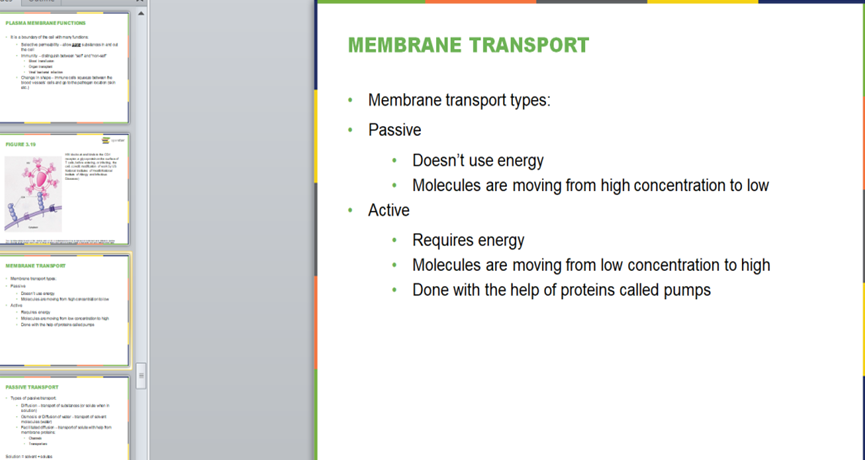
Topic: Membrane Transport
Membrane Transport
References
Abdulrahaman, M. D., Faruk, N., Oloyede, A. A., Surajudeen-Bakinde, N. T., Olawoyin, L. A., Mejabi, O. V., ... & Azeez, A. L. (2020). Multimedia tools in the teaching and learning processes: A systematic review. Heliyon, 6(11). View
at PublisherView
at Google Scholar
Adedamola A. K. (2018). The use of multimedia in teaching biology and its impact on students’ learning outcomes. The Eurasia Proceedings of Educational & Social Sciences, 9, 157-165. View
at PublisherView
at Google Scholar
1. Al Meajel, T. M., & Sharadgah, T. A. (2018). Barriers to using the blackboard system in teaching and learning: Faculty perceptions. Technology, Knowledge and Learning, 23, 351-366. View
at PublisherView
at Google Scholar
Al-Ani, W.T. (2013). Blended Learning Approach Using Moodle and Student’s Achievement at Sultan Qaboos University in Oman. Journal of Education and Learning, 2, 96-110. View
at PublisherView
at Google Scholar
Aloraini, S. (2012). The impact of using multimedia on students’ academic achievement in the College of Education at King Saud University. Kind Saud Univ. J. King Saud Univ. Lang. Transl., 24, 75–82. View
at PublisherView
at Google Scholar
Arthur-Baidoo, F., Azumah, D. A., Osei-Manu, F., & Annan, M. K. (2022). Learners’ perceptions of computer-assisted instruction approach in teaching and learning of photosynthesis in biology lessons. Online Journal of Microbiological Research, 1(1), 8-16. View
at PublisherView
at Google Scholar
Azevedo, R. A., & Kali, G. (2010). The effects of interactive multimedia instructional approach simulations on students’ problem-solving ability and conceptual understanding in biology. International Journal of Science Education, 32(9), 1341-1358. View
at PublisherView
at Google Scholar
Awang-Kanak, F., Masnoddin, M., Matawali, A., Daud, M. A., & Jumat, N. R. (2016). Difficulties experience by science foundation students on basic mendelian genetics topic: A preliminary study. Transactions on Science and Technology, 3(1-2), 283-290. View
at PublisherView
at Google Scholar
Borja, E. A., & Mutya, R. C. (2024). Enhancing Student’s Conceptual Understanding on the Patterns of Mendelian Genetics through Task-Based Learning. Journal of Biological Education Indonesia, 10(1), 107-114. View
at PublisherView
at Google Scholar
Bali, C., Tasdelen, B., Bandi, S., & Zsidó, A. (2026). Understanding the cognitive cost of multimedia learning: Effects of visual load and language proficiency. Cognitive Research: Principles and Implications, 11(2), 1–15. View
at PublisherView
at Google Scholar
Bonk, C. J., & Zhong, J. (2006). Multimedia instructional design for educators: Theory into practice. John Wiley & Sons. View
at PublisherView
at Google Scholar
Buckley, B. C. (2000). Interactive multimedia and model-based learning in biology. International Journal of Science Education, 22(9), 895-935. View
at PublisherView
at Google Scholar
Çeliker, H. D. (2015). Prospective science teachers’ levels of understanding and explanation of animal and plant cells: Draw-write. Journal of Baltic Science Education, 14(4), 501-512. View
at PublisherView
at Google Scholar
Chen, F.-Z., Chen, L.-A., Tseng, C.-C., Pai, C. H., Tsai, K.-E., Liang, E.-C., Chen, Y.-F., Chen, T.-L., & Lee, P.-C. (2025). Enhancing student engagement and learning outcomes in life sciences: Implementing interactive learning environments and flipped classroom models. Discover Education, 4, Article 102. View
at PublisherView
at Google Scholar
Chen, Y. L., & Lee, Y. H. (2018). Using interactive multimedia instructional approach in genetics instruction to enhance students' learning outcomes. Journal of Science Education and Technology, 27(6), 557-570. View
at PublisherView
at Google Scholar
Ferreira, C., Baptista, M., & Arroio, A. (2013). Teachers' pedagogical strategies for integrating multimedia tools in science teaching. Journal of Baltic Science Education, 12(4), 509. View
at PublisherView
at Google Scholar
Ginting, D., & Linarsih, A. (2022). Teacher professional development in the perspective of Technology Pedagogical Content Knowledge theoretical framework. Journal Visi Ilmu Pendidikan, 14(1), 1-10. View
at PublisherView
at Google Scholar
Haddad, W. D., & Draxler, A. (2002). The dynamics of technologies for education. Technologies for education: Potentials, parameters, and prospects, 2-17. View
at PublisherView
at Google Scholar
Hall, M., Hearn, J., & Lewis, R. (2022). Digital gender-sexual violations: Violence, technologies, motivations. Taylor & Francis. View
at PublisherView
at Google Scholar
Hannum, I., Dahlan, Z., & Budianti, Y. (2022). Implementation of the Madrasah Curriculum 1984 to 2013 in Al-Washliyah Private Madrasah 30 City of Binjai. Budapest International Research and Critics Institute-Journal (BIRCI-Journal), 5(1), 2221-2229. View
at PublisherView
at Google Scholar
Kassa, M. M., Azene, M. K., Mengstie, S. M., & Ferede, M. W. (2024). Effect of using multimedia and dynamic classroom integrated instruction on students’ biology academic achievement. Heliyon. View
at PublisherView
at Google Scholar
Mariati, S. L. (2024). The influence of interactive learning media on students’ learning interest in biology subjects in junior high schools. International Journal of Curriculum Development Teaching and Learning Innovation, 2(3), 127–13. View
at PublisherView
at Google Scholar
Ollamina-Gerez, K. M., & Dioso, E. D. (2023). Teaching strategies using the multimedia and student’s academic achievement: An experimental study. EPRA International Journal of Multidisciplinary Research (IJMR), 9(7), 307-315. View
at PublisherView
at Google Scholar
Paas, F., Renkl, A., & Sweller, J. (2004). Cognitive load theory and instructional design: Recent developments. Educational Psychologist, 39(1), 1-4. View
at PublisherView
at Google Scholar
Penuel, W. R., Riedy, R., Barber, M. S., Peurach, D. J., LeBouef, W. A., & Clark, T. (2020). Principles of collaborative education research with stakeholders: Toward requirements for a new research and development infrastructure. Review of Educational Research, 90(5), 627-674. View
at PublisherView
at Google Scholar
Pryor, C. R., & Bitter, G. G. (2008). Using multimedia to teach in-service teachers: Impacts on learning, application, and retention. Computers in Human Behavior, 24(6), 2668-2681. View
at PublisherView
at Google Scholar
Sattar, M. A., Maqbool, M. U., Zakir, F., & Billah, M. (2025). Enhancing student engagement through augmented reality in secondary biology education. Frontiers in Education. View
at PublisherView
at Google Scholar
Satyaprakasha, C. V., & Sudhanshu, Y. (2014). Effect of multimedia teaching on achievement in Biology. International Journal of Education and Psychological Research (IJEPR), 3(1), 43-45. View
at PublisherView
at Google Scholar
Sweller, J. (2010). Element interactivity and intrinsic, extraneous, and germane cognitive load. Educational Psychology Review, 22(2), 123-138. View
at PublisherView
at Google Scholar
Taiwo, S. K., & Emeke, E. A. (2014). Relationship among learning style preference, gender, age and students’ achievement in senior secondary school biology. West African Journal of Education, XXXIV. View
at PublisherView
at Google Scholar
Tzeng, S. Y., Lin, K. Y., & Lee, C. Y. (2022). Predicting college students’ adoption of technology for self-directed learning: a model based on the theory of planned behaviour with self-evaluation as an intermediate variable. Frontiers in Psychology, 13, 865803. View
at PublisherView
at Google Scholar
Wang, Y., Feng, X., Guo, J., Gong, S., Wu, Y., & Wang, J. (2022). Benefits of affective pedagogical agents in multimedia instruction. Frontiers in Psychology, 12, 797236. View
at PublisherView
at Google Scholar
Way, L., Pritchard, M. E., Wike, L., Reath, K., Gunawan, H., Prambada, O., & Syahbana, D. (2022). Detection of thermal features from space at Indonesian volcanoes from 2000 to 2020 using ASTER. Journal of Volcanology and Geothermal Research, 430, 107627. View
at PublisherView
at Google Scholar
Winarni, R. S., Rasiban, L. M., & Juangsih, J. (2022). The Effect of YouTube Video Learning Media on the Students’ Basic Japanese Listening Ability. In Sixth International Conference on Language, Literature, Culture, and Education (ICOLLITE) (pp. 455-459). Atlantis Press. View
at PublisherView
at Google Scholar
Wu, T. T., Huang, Y. M., Su, C. Y., Chang, L., & Lu, Y. C. (2018). Application and analysis of a mobile e-book system based on project-based learning in community health nursing practice courses. Journal of Educational Technology & Society, 21(4), 143-156. View
at PublisherView
at Google Scholar
Yang, H., Alsadoon, A., Prasad, P. W. C., Al-Dala’in, T., Rashid, T. A., Maag, A., & Alsadoon, O. H. (2022). Deep learning neural networks for emotion classification from text: enhanced leaky rectified linear unit activation and weighted loss. Multimedia Tools and Applications, 81(11), 15439-15468. View
at PublisherView
at Google Scholar
"ScienceHood Publishing exceeded our expectations with their seamless execution and professionalism. Their team ensured timely communication, high-quality production, and attention to detail throughout the process. They transformed our vision into reality, delivering exceptional results. We highly recommend them for their efficiency, expertise, and commitment to excellence in publishing."
Lara Simmons
"ScienceHood Publishing surpassed our expectations with their professionalism, timely communication, and exceptional attention to detail. They transformed our vision into reality with outstanding results. We highly recommend them for their expertise and commitment to excellence."
Shippora Smith
"Publishing in this journal gave me the opportunity to involve Bioinformatics, which is a cutting-edge field with so much potential, into my previous research on Optogenetics and Artificial Intelligence. This experience helped me better understand how closely interconnected STEM fields truly are, and how many opportunities exist for interdisciplinary collaboration to allow them to work together and, once again, change the world, as science has always done"
Tomas Hadi Acosta Aguilera
"Dear editors,
It has also been a real pleasure working with you on the publication of our article. Your patience, understanding, and prompt responses whenever we needed them have been a great help to us in this joint endeavour."


 :
© 2026 Francis Arthur-Baidoo. This open-access article is distributed under the terms of The Creative Commons Attribution License, which permits unrestricted use, distribution, and reproduction in any medium, provided the original author and source are credited.
:
© 2026 Francis Arthur-Baidoo. This open-access article is distributed under the terms of The Creative Commons Attribution License, which permits unrestricted use, distribution, and reproduction in any medium, provided the original author and source are credited.